
Spring Yard Cleanup Checklist for Kansas City Homeowners
A comprehensive spring yard cleanup checklist tailored to the Kansas City climate, covering everything from debris removal to bed preparation and lawn care priorities.
 Cayden Sommer March 29, 2026 7 min read
 Spring in Kansas City is unpredictable. One week it is 75 degrees and sunny, the next a late frost sweeps through and puts everything on hold. That inconsistency is exactly why having a clear plan for your spring yard cleanup matters. If you jump in too early, you risk damaging tender new growth. Wait too long, and you are behind before the season even starts.
Here is a priority-ordered checklist for getting your yard in shape, based on the specific timing and conditions we deal with in Johnson County and the greater KC metro area.
When to Start
In the Overland Park area, the general rule is to begin spring cleanup once daytime temperatures are consistently in the 50s and the ground is no longer saturated from snowmelt. In most years, that means late March to early April. Some years it is mid-March; in others, a cold and wet March pushes everything to the second week of April.
Do not use the calendar as your guide. Use the conditions. If the soil squishes underfoot when you walk across the lawn, it is too wet for heavy foot traffic and equipment. Working on saturated soil compacts it, which damages root systems and makes drainage problems worse for the rest of the season.
Phase 1: Debris Removal and Initial Assessment
Remove fallen branches and winter debris. Kansas City winters frequently bring ice storms that leave branches scattered across lawns and beds. Walk the entire property and clear out all branches, leaves, trash, and anything else that accumulated over winter. Pay special attention to areas under trees and along fence lines where debris tends to collect.
Check for animal damage. Voles are a common problem in Johnson County. They tunnel under snow cover and leave raised trails of dead grass across the lawn. If you find vole damage, rake out the dead grass to allow air and light to reach the soil. Most vole runs will fill in on their own as the grass resumes growth in spring.
Inspect hardscaping. Walk your sidewalks, patio, driveway, and retaining walls. Freeze-thaw cycles are hard on concrete and stone in our area. Note any heaving, cracking, or shifting that needs repair before it becomes a tripping hazard or drainage issue.
Phase 2: Lawn Care Priorities
Rake or dethatch lightly. If your lawn has a thick layer of dead grass and matted leaves, a light raking with a spring-tine rake helps air and sunlight reach the soil. Do not power-rake or aggressively dethatch in early spring. Cool-season grass in our area is just coming out of dormancy and does not recover well from aggressive mechanical disturbance until fall.
Apply pre-emergent herbicide. This is arguably the single most time-sensitive task of the entire spring. In the KC metro, soil temperatures typically reach the 55-degree threshold for crabgrass germination between late March and mid-April. Your pre-emergent needs to be down and watered in before that happens. If you are on a lawn application program, this should already be scheduled. If you are doing it yourself, do not wait until you see crabgrass. By then it is too late for pre-emergent.
Hold off on seeding. Pre-emergent herbicide and grass seed are incompatible. Pre-emergent prevents all seeds from germinating, including the ones you want. If your lawn needs overseeding, wait until September. Fall is the ideal time for seeding cool-season grass in Kansas City. Spring seeding is a gamble because new seedlings rarely survive the stress of their first Kansas City summer.
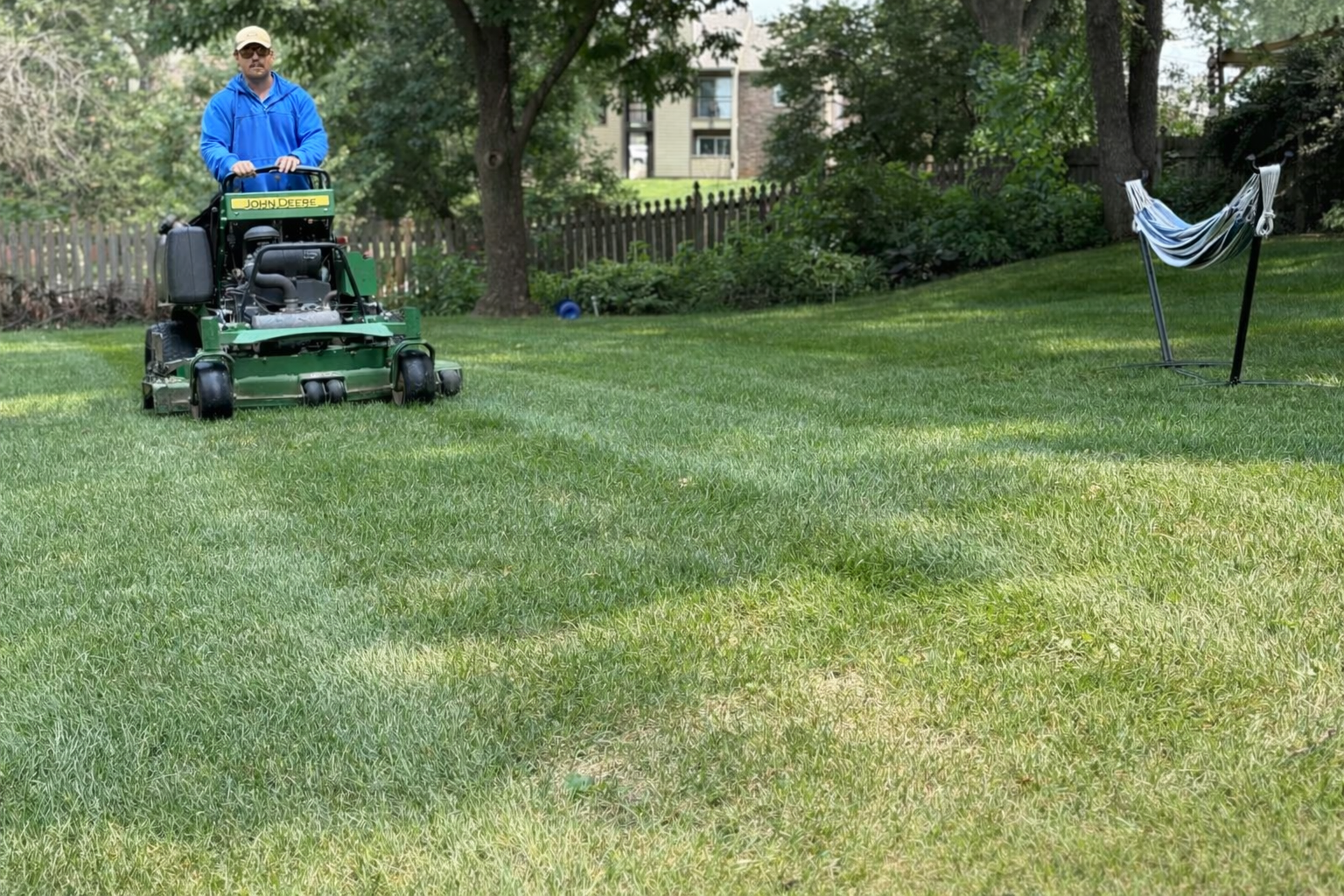
First mow. Once the grass reaches 3.5 to 4 inches, it is time for the first mow. In most years that falls in mid to late April. Set your mower to a 3-inch cutting height. Resist the urge to scalp the lawn. Cutting too short in early spring stresses the grass and gives weeds an advantage.
Phase 3: Landscape Bed Preparation
Edge all beds. Crisp bed edges make the single biggest visual impact of any spring task. Use a half-moon edger or flat spade to re-cut the edges of all landscape beds, tree rings, and borders. In Johnson County’s clay-heavy soil, beds tend to lose their definition over winter as soil shifts and grass creeps in. A clean edge also creates a natural barrier that makes mulch application neater.
Cut back ornamental grasses and perennials. Ornamental grasses like miscanthus and switchgrass should be cut back to 4 to 6 inches before new growth emerges. Most perennials that were left standing for winter interest can be cut back to the crown once you see new basal growth starting. Do this before the new growth gets tall enough to get tangled with the old stems.
Prune shrubs selectively. Spring-blooming shrubs like forsythia, lilac, and spirea should not be pruned until after they finish flowering. Pruning them now removes the flower buds. Summer-blooming shrubs and most deciduous shrubs can be pruned in late March or early April while still dormant. Remove dead wood, crossing branches, and any winter-damaged growth.
Weed the beds. Pull or hoe any early-season weeds before they get established. Henbit, chickweed, and deadnettle start growing in Johnson County as early as February. Getting them out before they set seed prevents exponential multiplication later.
Phase 4: Mulch Installation
Wait for soil to warm. Mulch is an insulator. Applying it too early traps cold soil temperatures and delays root growth in your beds. In the Kansas City area, mid-April to early May is the ideal window for mulch installation. The soil has warmed enough for plant roots to become active, and the mulch will then help retain that warmth and moisture through the growing season.
Apply 2 to 3 inches of mulch. Pull mulch back slightly from the base of trees and shrubs to prevent moisture buildup against bark. Do not create mulch volcanoes around tree trunks. That common mistake promotes rot, disease, and pest problems.
Consider your mulch type. Hardwood mulch is the most popular choice in the KC area for landscape beds. Cedar mulch offers natural insect-repelling properties. Dyed mulches hold their color longer but vary in quality. We cover mulch selection in detail in our complete mulch installation guide.
Phase 5: Irrigation and Watering
Inspect and activate your irrigation system. If you have an in-ground sprinkler system, schedule a spring startup with your irrigation company. Check all heads for damage from winter freeze. Adjust spray patterns to account for any new plantings or changes in the landscape. In Johnson County, most irrigation systems should be activated in early to mid-April, depending on weather.
Check outdoor faucets and hoses. Freeze damage to hose bibs is common after KC winters. Turn on each faucet and check for leaks at the connection point and along the line.
Professional Cleanup vs. DIY
A full spring cleanup is a significant time investment. For a typical Overland Park property, plan on 6 to 10 hours if you are doing everything yourself. The work is physically demanding, and proper execution requires the right tools, particularly for bed edging and shrub pruning.
Professional spring cleanups from Sommer Lawn & Landscape cover all of the phases above in a single visit. Our crews handle debris removal, bed edging, pruning, bed weeding, and mulch installation efficiently because we do it daily across dozens of properties every spring. For homeowners who want to tackle some tasks themselves, we are happy to handle just the portions that make the biggest impact, like bed edging and mulch, while you take care of the rest.
The Bottom Line
Spring cleanup sets the tone for your entire season. A property that starts the year clean, edged, mulched, and properly treated will stay ahead of problems all the way through fall. The key is doing the right tasks in the right order at the right time for our specific climate.
If you need help getting your Overland Park, Leawood, Lenexa, or Olathe property ready for the season, reach out to Sommer Lawn & Landscape to request a spring cleanup quote.