
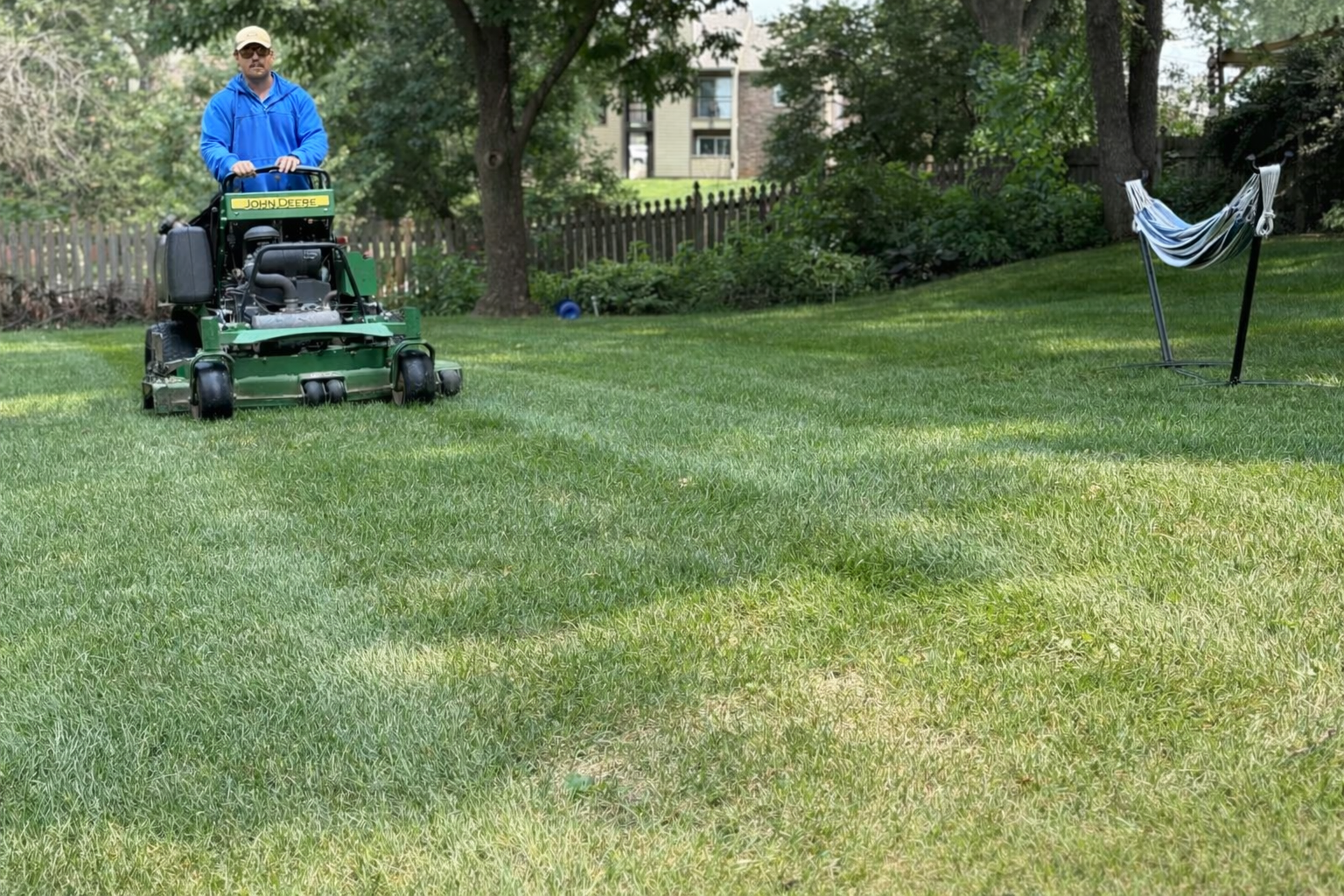
When to Start Mowing in Kansas City
Learn when to start mowing your lawn in the Kansas City area, including soil temperature thresholds, first mow tips, and cool-season grass considerations for spring.
 Cayden Sommer March 12, 2026 7 min read
 TLDR: In the Kansas City area, most lawns need their first mow in mid to late March, once soil temperatures consistently reach 50–55°F. Watch for active green growth, not just a green tint.
Every spring, homeowners across Johnson County and the greater Kansas City area face the same question: when is it actually time to start mowing? Push it too early and you risk damaging a lawn that hasn’t fully woken up. Wait too long and you’re fighting an overgrown mess that stresses your turf. Getting the timing right sets the tone for your entire growing season.
Understanding Your Grass Type
Before you can decide when to mow, you need to know what’s growing in your yard. The vast majority of lawns in the Kansas City metro are cool-season grasses, primarily tall fescue and Kentucky bluegrass. These grasses thrive in the temperature swings we experience in USDA Hardiness Zone 6a, where winters dip below zero and summers regularly push into the mid-90s.
Cool-season grasses have two active growth periods: spring and fall. They go semi-dormant during the hottest part of summer and fully dormant in winter. In spring, growth resumes once soil temperatures consistently reach 45 to 55 degrees Fahrenheit at a depth of about four inches.
The Soil Temperature Rule
Air temperature can be deceiving in a Kansas City spring. We’ve all experienced those 70-degree days in February followed by a hard freeze the next week. That’s why soil temperature is a far more reliable indicator than air temperature when deciding to start mowing.
Here’s the general timeline for the KC area:
- Late February to early March: Soil temps begin rising but are typically still in the 35-45 degree range. Your grass is still dormant.
- Mid to late March: Soil temps start hitting 45-50 degrees on south-facing slopes and sunny areas. You may notice the first green-up.
- Late March to mid-April: Soil temps consistently reach 50-55 degrees. This is when most lawns in Johnson County need their first mow.
You can check current soil temperatures through the Kansas Mesonet (maintained by Kansas State University), which provides real-time readings from weather stations across the state. The Olathe station is a great reference point for Johnson County homeowners.
Signs Your Lawn Is Ready
Beyond soil temperature data, your lawn will give you visual cues that it’s time to mow:
- Active green growth: Not just a green tint, but noticeable blade elongation. The grass should be actively growing, not just greening up from existing tissue.
- Height exceeding 3.5 to 4 inches: Once your fescue or bluegrass reaches this height, it’s time to mow. Letting it get much taller before the first cut creates stress.
- Consistent growth across the lawn: Isolated green patches in sunny spots don’t mean the whole lawn is ready. Wait until you see broad, consistent growth.
- Dry enough to mow: Spring in Kansas City means rain. Make sure the soil is firm enough to walk on without leaving footprints. Mowing wet, soft ground compacts the soil and tears grass rather than cutting it cleanly.
First Mow Best Practices
Your first mow of the season isn’t the time to scalp the lawn down. Here’s how to handle it properly:
Set Your Mowing Height to 3 to 3.5 Inches
For tall fescue, which dominates most Johnson County lawns, 3 to 3.5 inches is the ideal mowing height for early spring. Kentucky bluegrass can be cut slightly shorter at 2.5 to 3 inches, but there’s no harm in keeping it at 3 inches either.
A common mistake is cutting the lawn short on the first mow thinking it will “clean things up.” In reality, removing more than one-third of the grass blade at once shocks the plant and weakens the root system right when it’s trying to establish itself for the season.
Sharpen Your Mower Blades
After sitting all winter, your mower blades are almost certainly dull. Dull blades tear grass rather than cutting it, leaving ragged tips that turn brown and become entry points for disease. A freshly sharpened blade makes a clean cut that heals quickly. This is one of the simplest and most impactful things you can do for lawn health.
Bag the First Clipping (Maybe)
If there’s significant leaf debris or dead material from winter, bagging your first mow can help clean things up and allow more sunlight to reach the crown of the grass plant. After the first mow, switch back to mulching clippings. Mulched clippings return nitrogen to the soil and don’t contribute to thatch in any meaningful way.
Don’t Mow Frozen Ground
Even if the grass looks tall enough, never mow when the ground is frozen or there’s frost on the blades. Frozen grass is brittle and will break rather than cut, causing lasting damage to the plant tissue.
Dangers of Mowing Too Early
Mowing before your lawn is truly ready can cause several problems:
- Root damage: Wheel traffic on soft, waterlogged spring soil compresses the root zone. Compacted soil restricts root growth and water infiltration for the entire season.
- Crown damage: The crown of the grass plant, where new growth emerges, sits at or just below the soil surface. Cutting dormant or semi-dormant grass exposes the crown to temperature extremes and drying.
- Weed invitation: Scalping or damaging dormant grass opens gaps in the canopy that crabgrass and other spring weeds are eager to fill.
- Disease susceptibility: Wounded grass tissue in cool, damp spring conditions is an invitation for fungal diseases like leaf spot and brown patch.
What About Pre-Emergent Herbicide Timing?
While we’re talking about spring timing, it’s worth noting that the soil temperature window for first mowing often overlaps with pre-emergent herbicide application. In the Kansas City area, pre-emergent for crabgrass prevention should go down when soil temps hit 55 degrees for several consecutive days, typically in early to mid-April.
If you’re planning to overseed thin areas in spring (though fall is much better for this in our climate), keep in mind that pre-emergent herbicide will prevent grass seed from germinating too. You’ll need to choose one or the other for any given area.
A Typical Spring Mowing Schedule for Johnson County
Here’s a realistic timeline for most lawns in the Overland Park, Leawood, Lenexa, and Olathe area:
- Late March: First mow for lawns in sunny, south-facing areas that green up early. Mow at 3.5 inches.
- Early to mid-April: First mow for most lawns. This is when the majority of properties in Johnson County are ready. Continue mowing at 3 to 3.5 inches.
- Late April through May: Growth accelerates. You’ll likely need to mow weekly. Gradually raise your mowing height toward 3.5 to 4 inches as temperatures warm.
- June: Growth rate peaks before summer heat slows things down. Weekly mowing is essential.
Let the Lawn Tell You When It’s Ready
The bottom line is that no calendar date works perfectly every year. Kansas City’s spring weather varies wildly. Some years we’re mowing in mid-March; other years, a late cold snap pushes the first mow to mid-April. Watch your soil temperatures, observe your lawn’s growth, and resist the urge to force the season.
At Sommer Lawn & Landscape, we monitor soil conditions closely to time our first mows across Johnson County. If you’d rather not worry about the details, our weekly mowing service takes the guesswork out of spring startup and keeps your lawn on track through the entire growing season.
The most important thing is to let your grass wake up on its own schedule, give it a proper first cut, and set yourself up for a healthy lawn all year long.